Our research following the 2024 Paralympics found that 6 in 10 disabled girls were inspired to try a new sport and 79% felt it proved “disabled sport is equally important as non-disabled sport”.
But despite wanting to get involved, disabled girls are not getting the support they need to be active.
4 in 10 say there aren’t enough opportunities for them locally and 43% say watching the Paralympics made them feel sad they gave up sport.
In this blog, we meet four women from the world of para-sport, to understand their experiences and reflect what it’s like for disabled girls to navigate the world of sport.
Didi: “I always knew I could make it”
Didi Okoh is a para-athlete who made her international debut at the Paris 2024 Paralympics, winning bronze in the T42 100m.
At eight, she competed in her first cross country race and loved it instantly. She was eager to progress and joined a club, finding a home in a sport that felt welcoming of who she was.
At 12, she developed lymphoedema, a condition causing severe leg swelling. This halted her progress and she faced ridicule about her appearance. Some coaches used her condition as an excuse not to coach her at all.
But at 18, she was introduced to para-sport and her whole world changed.
Speaking about her journey, she said: “Running gave me a determination and a drive that nothing else gave me. It’s given me friends across the world, opportunities to travel, and a place like I felt like I belonged.”
“I’m at a point now where I don’t see para-athletics as something less-than. I don’t need to compare it to my Olympic dream, because this is a whole separate dream that was just as hard, if not harder. And I did it all myself.”
Laura: From the sidelines to advocating for other disabled women
Laura Turner has been visually impaired all her life, with less than 5% vision. As a child in mainstream school, she was never allowed to take part in PE. While others played, she was forced to sit on the sidelines.
It wasn’t until she moved to a specialist school for her GCSEs that she experienced everything sport could offer her. She fell in love with it at once and with the right support, went on to represent Great Britain in para-athletics and goalball – something she had never imagined possible until a teacher finally believed in her.
Now 40, Laura is a disability advocate, speaking out about the exclusion she faced. Reflecting on her experiences, she said: “I just wanted to have a go at everything, as anybody would. I’d been sat on the bench for all these years, so I thought it was absolutely fantastic to then have all these sports to have a go at.”
“Sport and fitness means an awful lot to me. It will always mean a lot to me, and I don’t like to still see today people sat on the bench and missing out. Every sport can be adapted, there’s no excuse to leave someone out.”
Asha: “Motorsport gave me mental freedom”
Asha Silva’s racing career began at 38, but her love of motorsport started in childhood, watching Formula 1 with her dad and dreaming of becoming a racing driver (or pilot).
At school, she loved PE but struggled to focus. Years later, she would be diagnosed with autism and ADHD – answers she believes might have changed her early experiences.
She discovered Team Brit, an all-disabled racing team, while watching television, and because it was around that time she was exploring her neurodivergence, it meant she could try out.
Now, racing gives her “mental freedom” – a space to switch off and focus completely, free from the “plate spinning” her mind has become accustomed to.
When discussing what needs to change for disabled girls to feel accepted in sport, she said: “I’ve never thought that there are a percentage of disabled girls who are watching the Paralympics who feel sad that they gave it up.”
“I feel like there’s a gap where we need to nurture girls a lot more, so that they understand what it means to be strong, to fulfil themselves and their wants and needs. So they don’t feel less of a person and give up things they could be really great at.”
Shaimaa: “Sport quickly became something I needed”
Shaimaa Samy didn’t start sport until university. Growing up in Egypt, opportunities for disabled people in sport were limited, but at 21 she began discus throw and discovered a sense of strength she had never felt before.
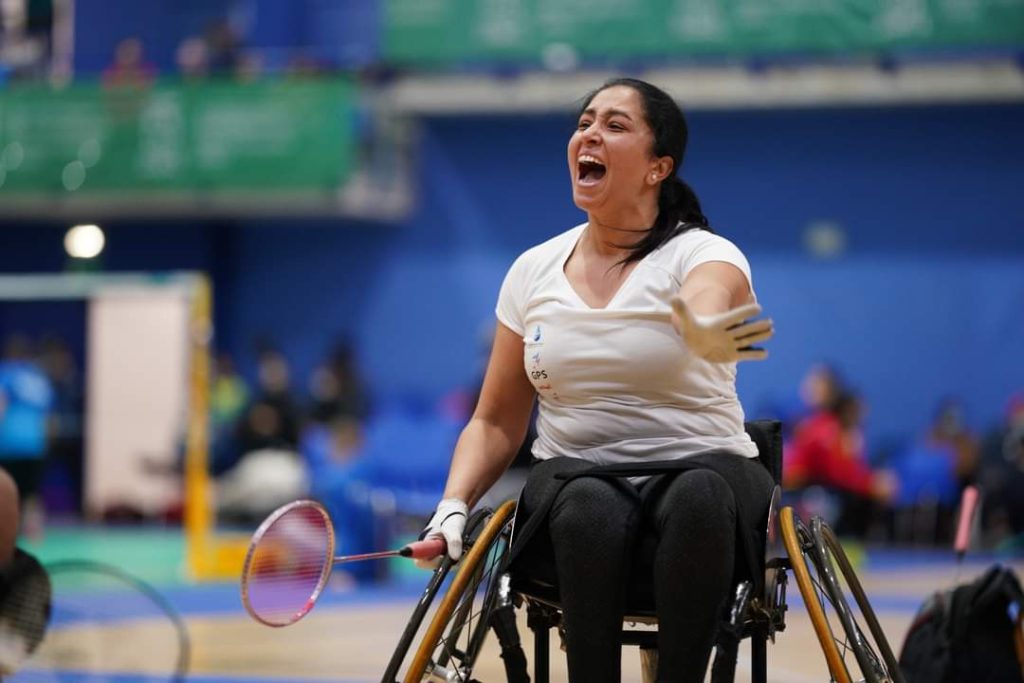
She later competed in wheelchair tennis and was instrumental in developing wheelchair badminton in Egypt, becoming African champion four times and winning more than 70 international medals.
She describes her life in two parts: before sport, and after. Sport changed what she believed was possible: “Sport gave me a voice, confidence and a reason to believe in myself. I didn’t start early but step by step I built myself to where I am today.”
“I’m most proud that I never gave up, even more than the medals. When you see the medals you’re so happy, but when you look back on your life and it’s recognised on the world stage: my journey is seen, my country is represented and disabled women are visible.”
A place where every woman can belong
These women’s stories highlight the power sport has to transform lives, but also the barriers that still too often get in the way.
Disabled women are often excluded early, underestimated and only supported if they show potential to become elite athletes.
But sport should not be reserved for the few. When women and girls are given real opportunities – at school, in clubs, and in the community – they too can thrive in sport.
Disabled women don’t just deserve a path to the podium. They deserve a place in sport at every level.
Read more about our Paralympics research here.